By M S Nazki
It’s only after you’ve stepped outside your comfort zone that you begin to change, grow, and transform. Success is not how high you have climbed, but how you make a positive difference to the world.
Be grateful for what you already have while you pursue your goals. If you aren’t grateful for what you already have, what makes you think you would be happy with more.
You never change your life until you step out of your comfort zone; change begins at the end of your comfort zone. Let the improvement of yourself keep you so busy that you have no time to criticize others.
Listen with curiosity. Speak with honesty. Act with integrity. The greatest problem with communication is we don’t listen to understand. We listen to reply. When we listen with curiosity, we don’t listen with the intent to reply. We listen for what’s behind the words.
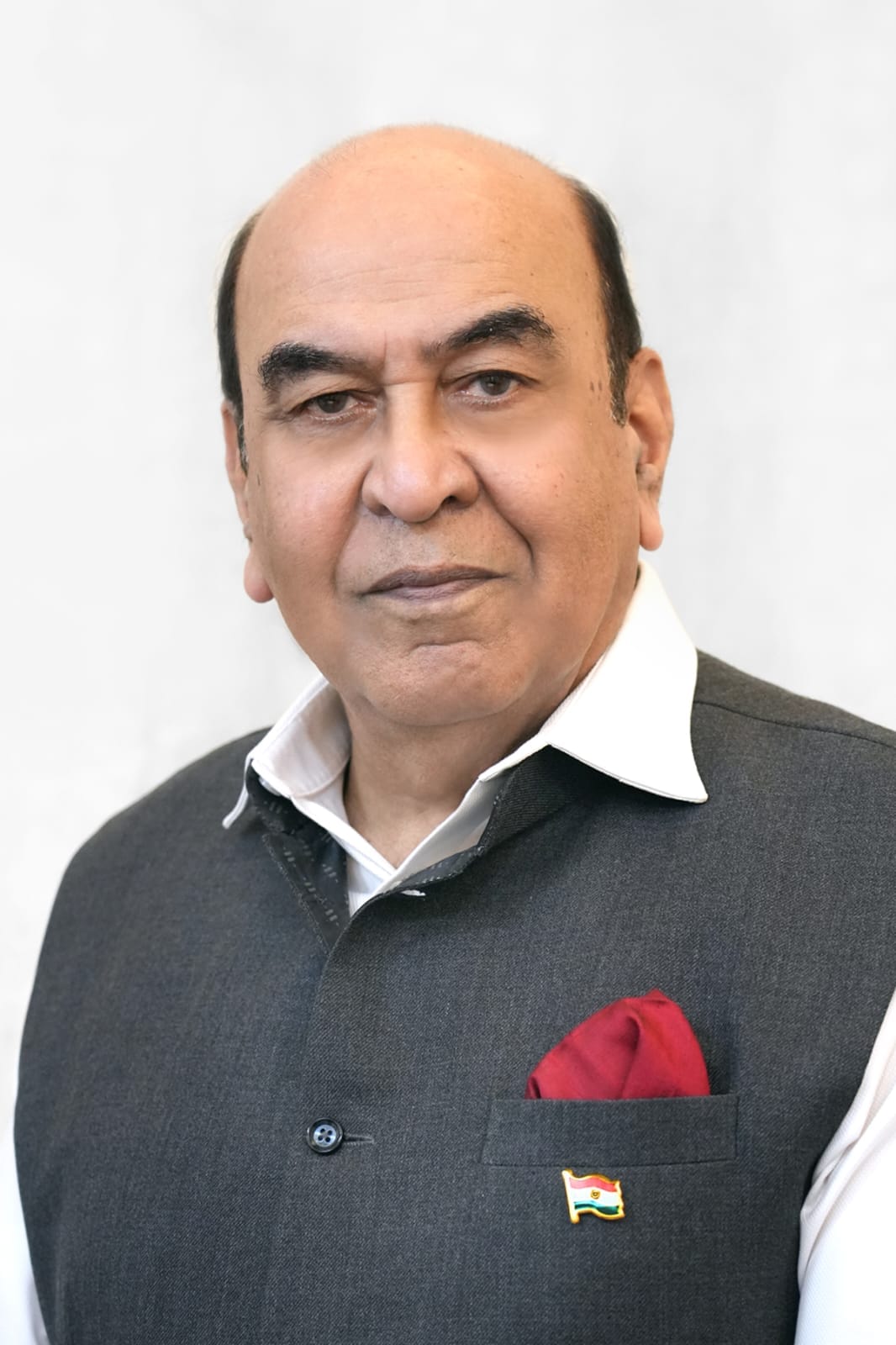
Lt. Gen. Syed Ata Hasnain (Retd.) represents dedication, discipline, honesty, and a deep commitment to public service. His personal faith is his own, but his professionalism and service to the nation are what deserve to be recognised and respected. True leadership is not about titles or labels — it is about integrity, courage, responsibility, and service. Salute to a dedicated public servant who continues to inspire respect through his commitment to duty. This is the crux of the story.
True leadership is defined by daily actions, moral character, and empowering others rather than holding an official rank or title. Ata Hasnain believes in this.
Four Pillars of True Leadership:
1. Integrity: Aligning your actions with your words and doing what is right even when nobody is watching.
2. Courage: Facing difficult challenges, making hard choices, and standing firm during times of uncertainty.
3. Responsibility: Owning the outcomes — taking the blame when things fail and sharing the credit when things succeed.
4. Service: Prioritizing the needs of your team or community to help them grow and succeed.
Some Stories of Great Leadership:
1. The Hotel With a Hockey Rink:
When organisations truly empower their employees, magic happens. The Ritz-Carlton is a great example. All its employees, referred to as Ladies and Gentlemen, are empowered to spend up to $2000 per guest to improve the guest experience — to deliver a WOW moment. No questions asked. No permission needed.
A loss prevention officer at The Ritz-Carlton in Toronto was called to a guest room for the second time to receive another complaint about children playing hockey in the corridor. He could have asked the parents to keep the children inside. Instead, he enlisted banquet employees to isolate space in a meeting room and create a hockey rink using banquet tables. He went to a local sports store and purchased two hockey nets, six hockey sticks and hockey balls. When ready, he sent a hand-written note to the family informing them that The Ritz-Carlton had a hockey rink and challenged them to a match against the Loss Prevention All-Stars. The match was played and won by Team Family. It was a WOW moment created by inspired leadership.
2. To Serve:
Chip Bell shares a great story from the 1995 book _Fabled Service_ by Betsy Sanders. While a store manager at Nordstrom, she and her team built the southern California business to $1 billion in annual sales.
In her book, she shares the story of a homeless woman dressed in dirty clothes who entered the flagship Nordstrom store in downtown Seattle. She went to the evening gown section and said she wanted to try on a dress. Without hesitation, the sales associate helped her try on several expensive dresses, commenting on how well she looked in each. After a while, the homeless woman thanked her and left with a smile, her head held high.
A customer who had witnessed the scene asked the associate why she took such time with someone who would not buy. The salesperson responded, “This is what we are here for: our purpose is to serve and be kind.”
Leadership is about having purpose and serving others.
3. Authenticity and Empathy:
New Zealand Prime Minister Jacinda Ardern’s leadership during the COVID-19 pandemic resonated with many. At home, after putting her daughter to bed, she hosted a Facebook Live Q&A wearing comfortable house clothes and apologised for her attire, explaining that “it can be a messy business putting toddlers to bed.”
Similarly, wearing the hijab, she comforted Muslim men and women following the Christchurch mosque shooting in 2019. She refused to be drawn into anti-Islamic rhetoric and swiftly brought in practical measures like gun legislation.
4. Last Man Out:
On 5 August 2010, Luis Urzua went to work as usual. He was the shift foreman for the group of 33 Chilean miners trapped 2000 feet underground in the Atacama Desert for 69 days.
As soon as the collapse happened, Urzua mobilised the team, rationing their two-day supply of food to last 17 days. He focused everyone on survival — digging for fresh water, mapping their tunnel, and building a latrine. Perhaps his greatest act of leadership was to be the last man to exit the mine.
5. It’s Not a Company, It’s a Cause:
6.
This was how the late Herb Kelleher, long-time CEO of Southwest Airlines, described his business. He wanted to “democratise the skies.” He created a culture of trust and empowered employees. Under his leadership, Southwest never had a layoff, furlough or pay cut, despite being one of the most unionised airlines in the world.
The Governor of Bihar:
The Governor of Bihar is the Constitutional Head of the State and exercises powers as defined in the Constitution of India. The Governor is also the ex-officio Chancellor of universities in the State.
The Governor’s Secretariat is headed by the Secretary to the Governor and is located at Bihar Raj Bhavan, Patna.
Profile: Lieutenant General Syed Ata Hasnain
Lieutenant General Syed Ata Hasnain, PVSM, UYSM, AVSM, SM, VSM & Bar (Retd.), born in 1953, is serving as the 43rd Governor of Bihar since 2026.
Hasnain last served as the Military Secretary. Earlier, he commanded the 15 Corps in Jammu and Kashmir and the XXI Corps in Bhopal.
In 2018, he was appointed Chancellor of Central University of Kashmir, and in 2020 was appointed Member of the National Disaster Management Authority (NDMA).
Early Life and Education:
He is the second son of Major General Syed Mahdi Hasnain, PVSM. He completed his schooling at Sherwood College, Nainital and received a B.A. (Honours) in History from Delhi University in 1972. He is an alumnus of the Asia Pacific Center for Security Studies (APCSS), Hawaii, USA, the Royal College of Defence Studies, London, and King’s College, University of London.
Military Career:
He was commissioned into the 4th Battalion, The Garhwal Rifles, from the Indian Military Academy, Dehradun, on 16 June 1974 — a unit raised by his father. He participated in Operation Pawan in Sri Lanka (1988-90) and counter-insurgency operations in Punjab (1990-91).
During the 1990s, he served with the United Nations in Mozambique and war-torn Rwanda. As a Brigadier, he served as Commander, 12 Infantry Brigade on the Line of Control at Uri. He later commanded 19 Infantry Division in Baramulla as a Major General.
In October 2010, he took over as GOC of the Srinagar-based XV Corps during a volatile period of civil unrest.
Key Role in Kashmir:
As GOC XV Corps (2010-2012), he conceived and operationalised the “Hearts Doctrine” which focused on people as the centre of gravity in Kashmir. His contribution was balancing hard power in counter-infiltration and counter-terrorist operations with military soft power. He held several meetings to redress grievances of common citizens to bring the Army closer to them. He also played a pivotal role in starting the Kashmir Premier League (KPL) in 2011 to build bridges between Kashmiris and Army men. His approach of “Playing Friend, Not God” has been widely appreciated.
On 9 June 2012, he took over as Military Secretary at Army Headquarters, New Delhi. He superannuated on 30 June 2013.
Post-retirement:
Ever since his superannuation, General Hasnain has been a member of Track 2 diplomacy with Pakistan, Visiting Fellow of the Vivekananda International Foundation, and Senior Fellow with Delhi Policy Group. He is also on the Governing Council of the Institute of Peace and Conflict Studies.
On 5 March 2026, he was appointed as Governor of Bihar by the President of India, Droupadi Murmu, replacing Arif Mohammad Khan. He was sworn in on 14 March 2026.
Five Other Military Generals Who Were Great Statesmen:
1. Alexander the Great (356 BC – 323 BC): Ascended the throne at 20 and expanded his empire from the Adriatic to the Indus, with victories over the Persians at Granicus, Issus and Gaugamela.
2. Genghis Khan (1162 2227): Rose from humble origins to unite Mongol tribes and conquer vast swathes of China, Central Asia and the Middle East.
3. Napoleon Bonaparte (1769 – 1821): Arguably the greatest general who ever lived, who redefined warfare with victories at Austerlitz, Jena, and Wagram before his fall after the invasion of Russia in 1812.
4. Erwin Rommel (1891 1944):The ‘Desert Fox’, famous for his leadership of the 7th Panzer Division in France and his North Africa Campaign at Tobruk and Gazala.
5. Georgy Zhukov (1896 – 1977): Marshal of the Soviet Union who led the successful defences of Leningrad, Moscow and Stalingrad and Operation Bagration which led to Germany’s defeat.
We will keep discovering and you keep reading, dear readers.